
Is a folding stroller durable enough for everyday use? In most cases, yes—as long as the stroller is designed for your child’s weight, the terrain you typically encounter, and how often you plan to use it. However, durability involves much more than whether a stroller simply looks sturdy.
A stroller’s strength depends on how its frame, joints, folding mechanism, wheels, brakes, and weight distribution work together. How a family uses, transports, cleans, and stores the stroller also directly affects how long it will last.
What Makes a Folding Stroller Durable?
A durable stroller must support the child’s weight while also handling the repeated forces created by movement, turns, braking, and bumps in the road or sidewalk.
These forces are known as dynamic loads. Unlike stationary weight, dynamic loads change depending on the stroller’s speed, the type of surface, and the amount of impact absorbed by the wheels.
Does the Frame Material Make a Difference?
Yes. Many stroller frames are made from aluminum, steel, or a combination of metals and engineered plastics.
Aluminum usually offers a good balance between strength and low weight. Steel tends to be heavier but may provide greater structural rigidity. However, the material alone does not determine the stroller’s overall quality.
The thickness of the tubing, frame design, welds, rivets, fasteners, and moving joints are just as important. A lightweight, well-engineered frame may be more stable than a heavier stroller with weak connection points.
Does the Folding Mechanism Make a Stroller Weaker?
Not necessarily. Folding mechanisms are designed to withstand repeated opening and closing. However, the moving joints require attention because they are exposed to ongoing friction, pressure, and wear.
Over time, improper use may cause looseness, bending, or difficulty locking the stroller into place. Forcing the stroller to fold when a toy, blanket, or other object is caught in the mechanism can also damage the components.
After opening the stroller, always confirm that the frame is fully extended and securely locked before placing your child in the seat.
Are Compact Strollers Less Durable?
A compact stroller is not automatically fragile. Many lightweight strollers are designed to handle frequent use when families follow the manufacturer’s weight and usage guidelines.
The main difference is usually the stroller’s intended purpose. Compact models are often designed for smooth surfaces, city errands, travel, public transportation, and easy storage in a car trunk.
Strollers with larger frames, suspension systems, and wider wheels may perform better on uneven sidewalks, park paths, or longer walks. This does not make them indestructible, but they may distribute certain types of impact more effectively.
Can a Lightweight Stroller Be Used Every Day?
Yes, as long as it matches your family’s routine. For short walks on smooth, level surfaces, a lightweight stroller may work very well.
Daily use on cobblestones, cracked sidewalks, gravel, sand, potholes, or uneven ground places more stress on the wheels, axles, and folding joints. In these situations, an extremely compact stroller may show wear more quickly.
Rather than focusing only on the stroller’s total weight, consider the wheel diameter, base stability, connection quality, suspension, and intended terrain.
How Do the Wheels Affect Durability?
The wheels absorb much of the impact produced during a walk. Small wheels make a stroller easier to fold and store, but they may have more difficulty moving over cracks, holes, and raised surfaces.
Larger wheels generally move over uneven ground more easily and are less likely to get stuck. A suspension system can also absorb some of the impact, reducing the amount of vibration transferred to the seat and frame.
Do Wobbly Wheels Mean the Stroller Is Broken?
A small amount of movement may be normal in a swiveling front-wheel system. However, increasing looseness, loud noises, sticking, or visibly tilted wheels should not be ignored.
These signs may indicate wear in the axle, wheel bearing, bushing, or attachment point. Continuing to use the stroller without having it evaluated could affect steering and stability.
Hair, string, sand, and small stones can also collect around the axles. Regular cleaning helps prevent this debris from interfering with the wheels’ movement.
Why Is the Stroller’s Weight Limit Important?
The manufacturer’s weight limit reflects both the stroller’s structural capacity and its stability. It should never be exceeded.
Remember to include the weight of items placed in the storage basket. Diaper bags, groceries, toys, and other belongings increase the total load placed on the frame and wheels.
Hanging heavy bags from the handlebar can be especially dangerous. The added weight shifts the stroller’s center of gravity backward and may increase the risk of tipping, particularly when the child moves or the stroller is on an incline.
What Are the Signs of Structural Wear?
Watch for the following warning signs during regular use:
- The stroller becomes difficult to open or close.
- Locks or latches no longer engage completely.
- The frame appears tilted, uneven, or asymmetrical.
- Wheels feel loose or look misaligned.
- The brakes do not remain securely engaged.
- The stroller makes frequent metallic noises.
- Fabric is torn near attachment or support points.
- Rivets, screws, bolts, or welds appear loose or damaged.
Stop using the stroller if you notice any significant structural changes. Follow the manufacturer’s instructions for inspection, repair, or replacement.
Temporary or homemade repairs may hide a problem without restoring the stroller’s original strength or safety.
How Can You Avoid Wearing Out a Stroller Too Quickly?
Always open and close the stroller according to the instructions in the owner’s manual. Do not step on the folding joints or use excessive force when the mechanism is not moving normally.
When approaching stairs or high curbs, avoid pushing the stroller forcefully into the obstacle. Repeated impacts can place unnecessary stress on the wheels, axles, and frame joints.
Avoid storing the stroller while it is wet. Moisture can contribute to corrosion on metal components, stains on the fabric, mold growth, and deterioration of internal parts.
Cleaning the stroller according to the manufacturer’s instructions can also help keep dirt and debris from building up in moving components.
Should a Stroller Be Lubricated?
Some stroller models allow specific products to be applied to the axles or joints. Lubrication should only be used when it is recommended in the owner’s manual.
The wrong type of oil or lubricant may attract dust, damage plastic components, stain the fabric, or come into contact with areas your child can touch.
Always follow the manufacturer’s care instructions.
How Can You Evaluate Safety Beyond Durability?
A stroller may feel strong but still create safety risks if it lacks stability, effective brakes, or an appropriate restraint system.
The harness should keep your child securely positioned in the seat. A five-point harness secures the shoulders, waist, and area between the legs, reducing the risk of the child slipping out or falling.
Engage the brakes whenever the stroller is parked, even when the ground appears flat. Keep children away from the moving joints while opening or folding the stroller to prevent pinched fingers.
Studies of stroller-related injuries have found that falls and tip-overs are among the most common causes of accidents. Head and facial injuries occur frequently, emphasizing the importance of using the harness, setting the brakes, and providing close adult supervision.
Can a Baby Sleep in a Stroller for a Long Time?
A stroller is designed primarily for transportation, not as a regular sleep space. Even when the seat reclines, it may remain angled or allow a baby to move into an unsafe position during an extended period of sleep.
When a young baby falls asleep in the stroller, the American Academy of Pediatrics recommends moving the baby to a firm, flat sleep surface as soon as practical. The baby should be placed on their back in a crib, bassinet, portable crib, or play yard that meets current U.S. safety standards.
This helps protect the baby’s airway. Young infants have limited head and neck control, and an overly flexed position may cause the chin to move toward the chest, making it more difficult to breathe freely.
Best Sellers
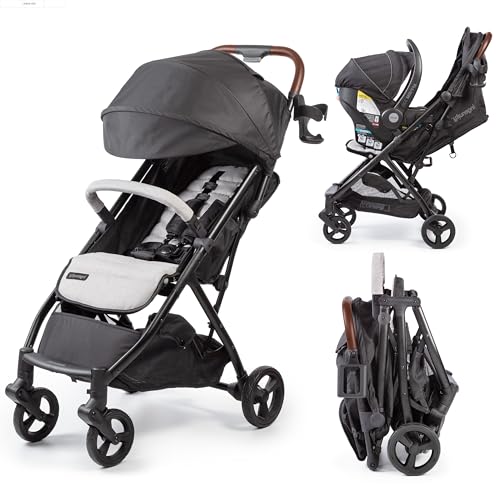
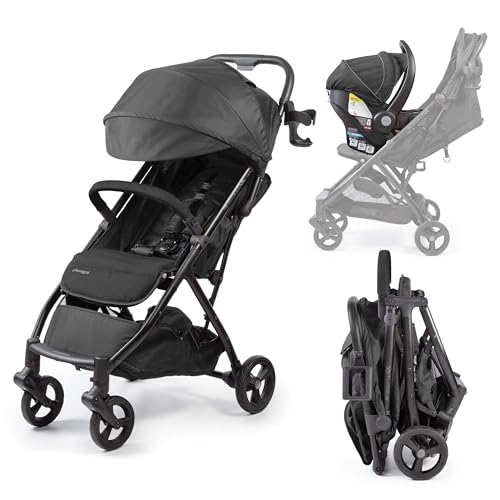
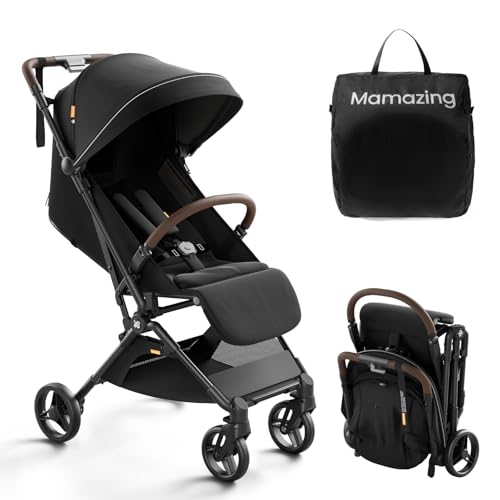
How Can You Tell Whether a Stroller Will Remain Durable?
Durability cannot be judged simply by shaking the handlebar or looking at the stroller’s exterior. Consider its design, intended use, weight limits, construction, and the current condition of its components.
Before each outing, perform a quick inspection. Check the frame locks, brakes, wheels, harness, and overall stability. This routine takes only a few seconds and may help you identify a developing problem before it becomes a safety risk.
It is also a good idea to register the stroller with the manufacturer and check for safety notices or recalls involving your specific model.
Conclusion: Durability Depends on Both the Stroller and How It Is Used
The answer to “Is a folding stroller durable enough for everyday use?” depends on how well the stroller matches your family’s needs. A well-designed folding stroller may provide years of reliable use when it is used within its limits and receives basic care.
Instead of choosing the stroller that simply looks the heaviest or strongest, pay attention to its stability, folding joints, wheel performance, brakes, harness, and suitability for the surfaces you use most often.
Durability is about more than how long a stroller lasts. In a product designed for children, it is directly connected to safety, fall prevention, and greater peace of mind for parents and caregivers.
References
U.S. Consumer Product Safety Commission — Carriages and Strollers Business Guidance:
https://www.cpsc.gov/Business–Manufacturing/Business-Education/Business-Guidance/Carriages-and-Strollers
Electronic Code of Federal Regulations — 16 CFR Part 1227, Safety Standard for Carriages and Strollers:
https://www.ecfr.gov/current/title-16/chapter-II/subchapter-B/part-1227
American Academy of Pediatrics — How to Choose a Safe Baby Stroller:
https://www.healthychildren.org/English/safety-prevention/on-the-go/Pages/How-to-Buy-a-Safe-Stroller.aspx
PubMed — Injuries Associated With Strollers and Carriers Among Children in the United States:
https://pubmed.ncbi.nlm.nih.gov/27402353/
PubMed — Incidence and Description of Stroller-Related Injuries to Children:
https://pubmed.ncbi.nlm.nih.gov/12415068/
PubMed — A Review of Stroller-Related and Pram-Related Injuries to Children:
https://pubmed.ncbi.nlm.nih.gov/26929260/
Most Read Posts

Postpartum Care

Baby Sleep

Breastfeeding

Infant Formula

Baby Bottles

Feeding Your Baby

Diapering & Bathing

Health & Development

Milestones & Development

Colic & Fussiness

Baby Gear & Safety

Traveling with Baby
Recent posts
- Liquid vs. Powder Baby Formula: Which Is the Better Value?
 Compare liquid vs. powder baby formula, including cost, convenience, safe preparation, storage, and which option may be best for your baby.
 - How Do I Know If I’m Ready to Care for a Newborn?
 Learn how to know if you’re ready to care for a newborn, with gentle guidance on feeding, safe sleep, warning signs, and emotional support.
 - First Baby: What If I Feel Lost in the First Few Days?
 Feeling lost with your first baby? Learn what is normal in the first newborn days, when to ask for help, and how confidence grows with time.
 - Is a Folding Stroller Durable Enough for Everyday Use?
 Is a folding stroller durable enough for everyday use? Learn what affects strength, safety, weight limits, and long-term performance.
 - Pregnant for the First Time: What Should You Do in the First Few Weeks?
 Pregnant for the first time? Learn what to do in the first few weeks, including prenatal care, nutrition, folic acid, and warning signs.
 - How to Support Your Partner During Labor and Delivery
 Learn how to support your partner during labor with practical tips for comfort, communication, pain relief, and emotional reassurance.
 - Can a Bedside Sleeper Help First-Time Moms?
 Can a bedside sleeper help first-time moms? Discover its benefits, safety tips, and how to choose the right option for your baby.
Click here to read the article in Portuguese

I’m Cris Coelho, and motherhood has transformed my life!
As a speech therapist and early childhood educator, I’ve always been passionate about child development. But it was becoming a mother that truly opened my eyes to the real challenges and joys of this journey.
Here at Materníssima, I share everything I’ve learned — blending professional knowledge, real-life experience, and a heartfelt touch.
You’re very welcome here! 💕