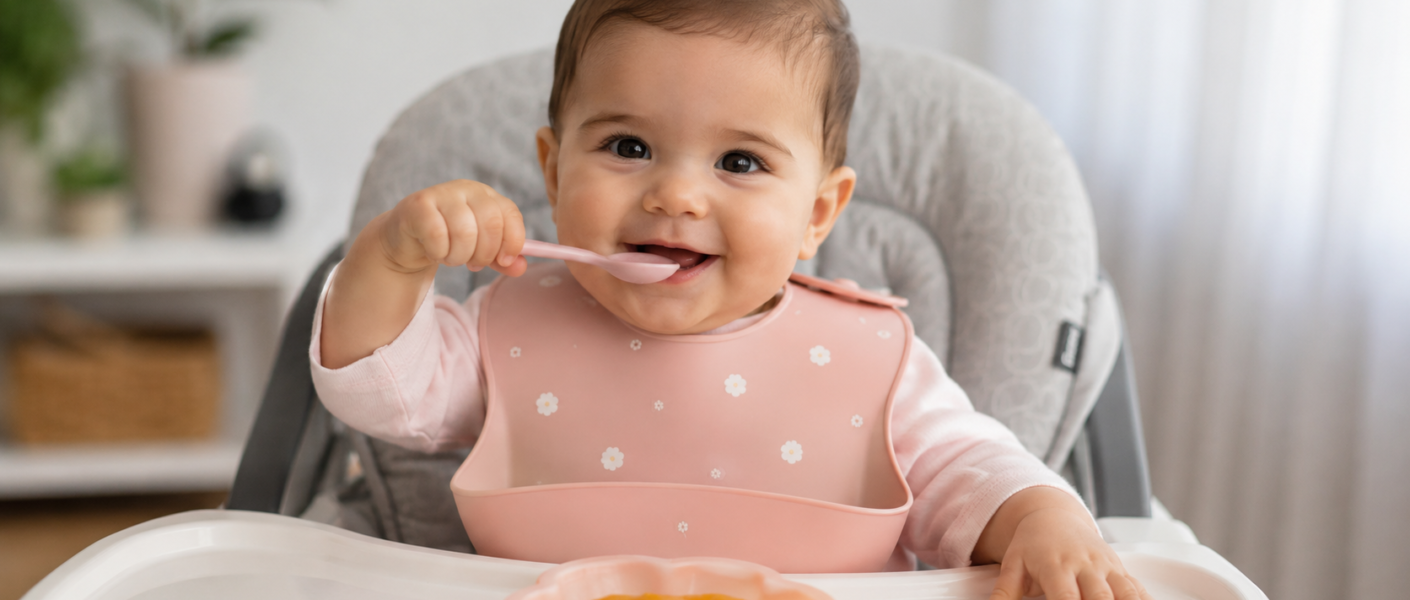
Starting solids is a beautiful learning stage, not just a nutrition milestone. Your baby is discovering new tastes, smells, textures, tongue movements, motor skills, and early signs of hunger and fullness.
So instead of focusing on “getting baby to eat a lot,” the goal is to offer safe, nutritious foods that match your baby’s development. Most pediatric guidelines recommend beginning complementary foods around 6 months of age, while breast milk or infant formula continues to be an important part of your baby’s diet.
When Is Baby Ready to Start First Foods?
Age matters, but it should not be the only sign. In general, many babies are ready to begin solids around 6 months, when breast milk or formula alone may no longer meet all of their growing nutritional needs.
Common signs of readiness include being able to sit with support, having good head and neck control, showing interest in food, opening the mouth when food is offered, and being able to swallow instead of pushing everything back out with the tongue.
Why Shouldn’t Solids Be Started Too Early?
Before 4 months, starting solid foods is not recommended. A baby may not yet have the neuromotor maturity needed to coordinate chewing, swallowing, and posture, which can increase the risk of choking and feeding difficulties.
Starting at the right time helps make the experience safer and calmer. Complementary feeding should follow your baby’s pace, without pressure and without comparing your baby to anyone else’s child.
What Should Baby’s First Purees Be Like?
Baby’s first foods should be simple, soft, and prepared without added salt or sugar. In the beginning, mashed, scraped, blended, or pureed foods can make oral adaptation easier.
Over time, textures should gradually become thicker and more varied. Around 6 months, many babies can handle mashed and soft semi-solid foods. By around 8 months, some babies may be ready for soft, safely prepared pieces of food.
Does Baby Food Need to Be Completely Liquid?
No. Very thin purees may have low energy density, meaning they fill the stomach but may not provide enough nutrients. A better texture is creamy or mashed, thick enough to slowly slide off the spoon.
A nourishing baby meal often includes an energy-rich food, such as sweet potato, potato, rice, oatmeal, or squash; a protein source, such as meat, chicken, fish, egg, beans, lentils, or chickpeas; and a variety of vegetables.
Which Nutrients Deserve Extra Attention?
During the second half of the first year, iron and zinc are especially important. These nutrients support healthy blood formation, brain development, immunity, and growth.
Well-cooked, shredded, finely chopped, or blended meats can be helpful sources of iron and zinc. Beans, lentils, chickpeas, and iron-fortified infant cereals can also support this stage.
Animal-based iron, found in meats, is usually easier for the body to absorb. Plant-based iron from beans and lentils is also valuable, especially when paired with vitamin C-rich foods like strawberries, citrus, tomatoes, or bell peppers prepared in an age-appropriate way.
Can Fruits Be Offered From the Beginning?
Yes. Fruits can be offered from the start, preferably as whole fruit in a safe texture, such as mashed banana, mashed avocado, soft ripe pear, cooked apple, or mashed papaya.
Juice, however, is not the best choice for babies under 12 months. Whole fruit preserves fiber, texture, and fullness, while juice concentrates natural sugars and may reduce interest in more nutritious foods.
How Can New Foods Be Introduced Safely?
A careful approach is to offer one new food at a time and observe your baby for 3 to 5 days for possible reactions, such as vomiting, diarrhea, rash, hives, or a significant increase in digestive discomfort.
This does not mean your baby’s diet needs to stay limited or repetitive for too long. Once basic foods have been introduced and tolerated, variety should gradually increase. Babies learn through repeated exposure.
Should Allergenic Foods Be Avoided?
Current guidance does not recommend delaying common allergenic foods without medical advice. Foods such as egg, fish, wheat, age-appropriate dairy products, and thinned smooth peanut butter may be introduced once baby is already tolerating solid foods.
If your baby has severe eczema, an egg allergy, or a strong history of food allergy, it is safest to talk with your pediatrician before offering peanut products or other common allergens.
Which Foods Should Be Avoided in Baby’s First Meals?
Honey should not be offered before 12 months because of the risk of infant botulism. Cow’s milk should also not be used as the main drink before age 1, although small amounts in recipes may be acceptable if approved by your pediatrician.
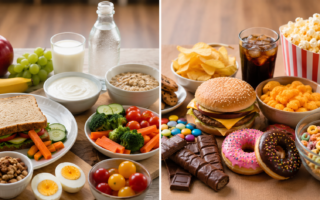
It is also important to avoid added salt, added sugar, ultra-processed foods, soda, sweet drinks, coffee, candy, processed meats, and foods that are hard, sticky, round, or difficult to chew.
Whole grapes, whole nuts, popcorn, large chunks of meat, raw carrot pieces, and thick spoonfuls of nut butter are classic choking hazards and should be avoided or modified into a safe form.
How Can Parents Reduce the Risk of Choking?
Your baby should eat while seated upright, always with close supervision, and in a calm environment. Foods should be soft, well-cooked, and cut, mashed, or prepared according to your baby’s ability.
Avoid feeding your baby while they are crying, sleepy, lying down, or distracted by screens. Eating is an active skill that requires attention, posture, and coordination.
How Often Should Baby Eat in the Beginning?
From 6 to 8 months, complementary foods are usually offered 2 to 3 times a day, while breast milk or formula continues. From 9 to 11 months, meals often increase to 3 to 4 times a day. From 12 to 24 months, nutritious snacks may be added according to the child’s needs.
In the beginning, tiny amounts are completely normal. One or two small spoonfuls can already be a big achievement. What matters most is gentle, respectful progress.
Does Baby Need to Finish the Plate?
No. Forcing spoonfuls can interfere with your baby’s natural sense of fullness and turn mealtime into stress. Responsive feeding respects your baby’s cues: opening the mouth, leaning toward the food, turning the face away, closing the mouth, or showing signs of tiredness.
Rejecting a food once does not mean your baby “doesn’t like it.” Some babies need many exposures before accepting a new taste or texture.
How Can You Build a Balanced Baby Puree?
A good base might include sweet potato, potato, rice, oatmeal, squash, or another soft starch. Then add a protein source such as chicken, beef, fish, egg, beans, or lentils, along with vegetables like pumpkin, zucchini, cooked carrot, spinach, broccoli, or peas.
Mash with a fork when possible, instead of over-blending everything. Safe little soft lumps can help your baby develop chewing skills and become more comfortable with texture over time.
You can use mild natural seasonings such as garlic, onion, parsley, or chives, but avoid added salt. This helps your baby learn the real flavor of family foods in a safe and age-appropriate way.
Conclusion: How Can First Foods Become a Learning Experience?
Starting solids is built one day at a time. There will be days of curiosity, mess, and happy little spoonfuls. On other days, your baby may only touch, smell, or refuse the food. That is all part of the process.
With patience, safety, and a calm routine, first foods can become more than a meal. They can become a loving opportunity for discovery, connection, and healthy development.
Most Read Posts

Postpartum Care

Baby Sleep

Breastfeeding

Infant Formula

Baby Bottles

Feeding Your Baby

Diapering & Bathing

Health & Development

Milestones & Development

Colic & Fussiness

Baby Gear & Safety

Traveling with Baby
Recent posts
- Liquid vs. Powder Baby Formula: Which Is the Better Value?
 Compare liquid vs. powder baby formula, including cost, convenience, safe preparation, storage, and which option may be best for your baby.
 - How Do I Know If I’m Ready to Care for a Newborn?
 Learn how to know if you’re ready to care for a newborn, with gentle guidance on feeding, safe sleep, warning signs, and emotional support.
 - First Baby: What If I Feel Lost in the First Few Days?
 Feeling lost with your first baby? Learn what is normal in the first newborn days, when to ask for help, and how confidence grows with time.
 - Is a Folding Stroller Durable Enough for Everyday Use?
 Is a folding stroller durable enough for everyday use? Learn what affects strength, safety, weight limits, and long-term performance.
 - Pregnant for the First Time: What Should You Do in the First Few Weeks?
 Pregnant for the first time? Learn what to do in the first few weeks, including prenatal care, nutrition, folic acid, and warning signs.
 - How to Support Your Partner During Labor and Delivery
 Learn how to support your partner during labor with practical tips for comfort, communication, pain relief, and emotional reassurance.
 - Can a Bedside Sleeper Help First-Time Moms?
 Can a bedside sleeper help first-time moms? Discover its benefits, safety tips, and how to choose the right option for your baby.
Click here to read the article in Portuguese

I’m Cris Coelho, and motherhood has transformed my life!
As a speech therapist and early childhood educator, I’ve always been passionate about child development. But it was becoming a mother that truly opened my eyes to the real challenges and joys of this journey.
Here at Materníssima, I share everything I’ve learned — blending professional knowledge, real-life experience, and a heartfelt touch.
You’re very welcome here! 💕