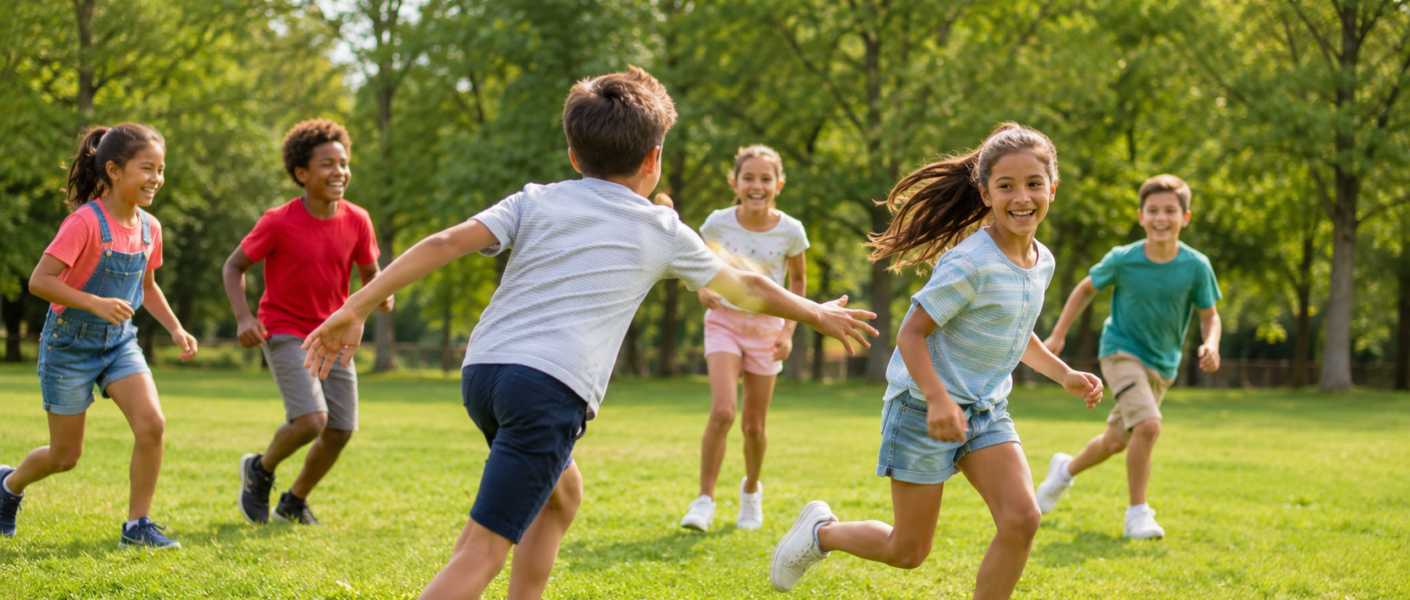
Movement in childhood is about much more than simply “burning off energy.” For children, moving their bodies is an essential way to learn, process emotions, build physical strength, and develop independence.
Running, jumping, balancing, dancing, climbing, playing on the floor, and exploring new spaces all help the brain and body mature together. Movement supports nearly every area of childhood development, including physical, emotional, social, and cognitive growth.
Why Is Movement So Important During Childhood?
Movement plays a direct role in neuromotor development, which is the connection between the brain, muscles, joints, balance, coordination, and body awareness.
Whenever a child moves, several important systems are activated. These include the vestibular system, which helps control balance; the proprioceptive system, which helps children understand where their bodies are in space; and the musculoskeletal system, which supports strength, posture, stability, and coordination.
Through everyday movement, children gradually learn how much force to use, how to adjust their balance, and how to move safely through different environments.
These skills may seem simple to adults, but they are the result of complex communication between the brain and body.
What Happens in a Child’s Body During Movement?
When children are physically active, their bones, muscles, tendons, and joints receive the stimulation they need to grow stronger and become more resilient.
Movement helps children develop gross motor skills, such as running, jumping, kicking, throwing, and climbing. It also supports the body control needed for more precise movements, including writing, getting dressed, using utensils, and handling small objects.
Physical activity also strengthens the heart and lungs. Over time, regular movement can improve endurance, energy levels, circulation, and overall cardiovascular health.
Active play during childhood may also help establish healthy habits that support long-term metabolic health and physical well-being.
How Does Movement Influence a Child’s Brain?
A child’s brain is constantly developing. Every new physical experience helps create and strengthen neural connections.
For this reason, movement is not a break from learning. Movement is part of learning.
Physical activity can support attention, working memory, planning, problem-solving, and inhibitory control. These abilities are known as executive function skills.
Executive function helps children wait their turn, follow directions, manage impulses, adjust to changes, complete tasks, and cope with frustration.
When children move through an obstacle course, follow the steps of a dance, or play a game with rules, they are using both their bodies and their brains.
Why Is Active Play Also a Form of Learning?
Movement-based play requires children to make decisions.
When a child jumps over a puddle, moves around an obstacle, catches a ball, or participates in a group game, the child must judge distance, control force, interpret social cues, and anticipate what may happen next.
These experiences require cooperation between the motor, sensory, emotional, and cognitive areas of the brain.
Free play is especially valuable because it gives children opportunities to explore, experiment, make mistakes, and find solutions without always being told exactly what to do.
A simple trip to the playground can involve balance, creativity, communication, risk assessment, patience, and problem-solving—all at the same time.
Can Movement Improve Attention, Memory, and School Performance?
Regular physical activity is associated with cognitive benefits for children and teens, particularly in areas such as attention, memory, and academic performance.
This does not mean that movement replaces studying or classroom instruction. Instead, it shows that an active body can help support an active and engaged mind.
Activities that combine movement with rules, problem-solving, cooperation, or changes in direction may be especially helpful.
Tag, dance, team sports, obstacle courses, movement games, and playground activities can challenge both the body and the brain.
Even short movement breaks during the school day may help some children return to their work feeling more focused and ready to learn.
What Role Does Neuroplasticity Play?
Neuroplasticity is the brain’s ability to adapt, reorganize, and create new connections. This ability is especially strong during childhood.
Movement supports blood flow to the brain and helps regulate important brain chemicals involved in mood, attention, and learning. Physical activity may also support processes related to the growth and communication of brain cells.
In simple terms, when children have frequent, safe, and age-appropriate opportunities to move, their brains receive valuable stimulation that supports healthy development.
Children do not need complicated exercise programs to receive these benefits. Everyday activities, such as dancing, climbing, playing outside, and riding a bike, can provide meaningful physical and neurological stimulation.
How Does Movement Affect Children’s Emotions?
Physical activity can also support emotional health.
Moving the body may help regulate stress, improve mood, release physical tension, and create a sense of well-being. Active play can give children a healthy outlet for feelings they may not yet know how to explain.
Young children often communicate through behavior and movement before they can fully express their emotions with words.
A child who has been sitting for a long time may become restless, frustrated, or overwhelmed. Time spent running, jumping, stretching, or playing outside may help the child feel more organized and calm.
Movement can also build confidence. Learning to climb, balance, catch a ball, or complete a physical challenge can give children a meaningful sense of accomplishment.
Can Movement Help With Anxiety and Irritability?
Movement may help reduce tension and support emotional regulation, especially when it is part of a balanced daily routine.
Physical activity can help children release built-up energy, improve sleep, and regulate their level of alertness. Some children feel calmer after energetic play, while others may benefit from slower activities such as walking, stretching, swimming, or yoga designed for children.
However, persistent anxiety, intense irritability, major behavior changes, or ongoing attention difficulties should not be dismissed as simply a lack of exercise.
Movement is a valuable resource, but it does not replace professional support when a child needs additional evaluation or care.
Parents who are concerned about a child’s emotional or behavioral health should speak with the child’s pediatrician or another qualified healthcare professional.
Is There a Connection Between Movement and Children’s Sleep?
Yes. Children who are physically active during the day may be better able to regulate their energy levels and develop healthy physical tiredness by bedtime.
Daytime activity, exposure to natural light, and consistent routines can also help support the body’s circadian rhythm, or internal clock.
Sleep is essential for growth, immune function, memory, learning, and emotional regulation. A routine that includes movement, balanced meals, time outdoors, and reduced screen use before bed may help create better conditions for restful sleep.
However, highly stimulating activity immediately before bedtime may make it harder for some children to settle down. Calmer activities are usually a better choice as bedtime approaches.
How Much Physical Activity Do Children Need?
In the United States, recommendations vary by age.
Preschool-aged children should be physically active throughout the day through play and age-appropriate activities.
School-aged children and teens ages 6 through 17 should generally get at least 60 minutes of moderate-to-vigorous physical activity each day. Activities that strengthen muscles and bones should be included at least three days per week.
This does not mean children must complete a formal one-hour workout.
Movement can happen throughout the day. Playing in the backyard, riding a bike, dancing, walking the dog, playing tag, jumping rope, swimming, and participating in sports all count.
The goal is to make regular movement a natural and enjoyable part of daily life.
What If a Child Does Not Like Sports?
Not every child enjoys competition or organized sports, and that is completely okay.
A child who does not enjoy soccer, basketball, or baseball is not necessarily “naturally inactive.” The child may simply need a different kind of movement.
Parents can offer a variety of options, such as:
- Dancing
- Swimming
- Martial arts
- Hiking
- Bike riding
- Playground activities
- Trampoline play with proper supervision
- Yoga for children
- Cooperative games
- Indoor obstacle courses
- Active games with music
- Family walks
The most helpful activity is often one the child genuinely enjoys and feels comfortable doing.
Pressure, criticism, or constant comparison can make children less interested in movement. Encouragement and curiosity are usually more effective.
Instead of asking, “Why don’t you like sports?” parents might ask, “What kind of movement feels fun to you?”
Does Too Much Screen Time Interfere With Movement?
It can, especially when screens take up a large portion of a child’s free time and replace opportunities for active play, outdoor exploration, face-to-face interaction, or sleep.
The concern is not only the screen itself. It is also what the screen may be replacing.
When children spend many hours sitting, they may miss important experiences that help develop coordination, posture, creativity, social skills, and emotional self-regulation.
Screens are part of modern family life, and parents do not need to treat every minute of screen use as harmful. The goal is to create a healthy balance.
Children still need time to move, play, rest, connect with others, and explore the world beyond a device.
How Can Families Balance Screens and Active Play?
A predictable routine can make balance easier.
Families can create regular times for schoolwork, meals, rest, screens, active play, and sleep. Movement should not be presented as punishment or as something children must do to “earn” food or screen time.
Instead, it can be treated as a normal and enjoyable part of the day.
Adult participation also makes a difference. Children learn through observation, and they are often more willing to move when parents and caregivers join them.
A family walk, a trip to the park, a living-room dance party, or a game of catch may be more inviting than simply telling a child to “go exercise.”
The activity does not need to be elaborate. Consistency and connection matter more than perfection.
How Can Parents Encourage Safe Movement?
The environment should be appropriate for the child’s age, developmental level, abilities, and health needs.
Safety does not mean preventing every fall, mistake, or challenge. Children need opportunities to test their abilities, explore reasonable limits, and learn from experience.
Small stumbles, repeated attempts, and adjustments are often part of healthy motor development.
Parents and caregivers can reduce serious risks by checking play areas, using appropriate protective equipment, teaching basic safety habits, and providing supervision that matches the child’s age and activity.
A toddler learning to climb requires close supervision. An older child riding a bike may need a properly fitted helmet, clear boundaries, and continued guidance about traffic safety.
The goal is not to remove every challenge. It is to make exploration as safe and developmentally appropriate as possible.
When Should Parents Seek Professional Guidance?
Consider speaking with a professional when a child experiences:
- Significant delays in motor development
- Frequent falls that seem unusual for the child’s age
- Persistent pain during or after movement
- Extreme fatigue with ordinary activity
- Noticeable difficulty with coordination or balance
- Loss of previously developed motor skills
- Strong and ongoing avoidance of all physical activity
- Difficulty participating in play with peers
- Sensory reactions that interfere with everyday movement
A pediatrician can help determine whether further evaluation is needed.
Pediatric physical therapists, occupational therapists, physical education professionals, developmental specialists, and child psychologists may also help identify motor, sensory, emotional, or behavioral factors affecting the child’s participation.
Early support can make activities feel safer, more comfortable, and more successful for both the child and the family.
What Does Movement Teach a Child?
Movement teaches children how to live confidently within their own bodies.
It teaches balance, strength, rhythm, patience, courage, boundaries, cooperation, and independence.
Through movement, children learn that they can try, fall, adjust, and try again. They discover what their bodies can do and how to respond when something feels challenging.
Movement does more than prepare the body. It helps organize the mind.
It is not only about athletic performance. It expands a child’s ability to play, learn, communicate, explore, and connect with others.
When we think about a healthy childhood, we often remember the importance of love, nutrition, sleep, safety, and secure relationships. Children also need time, space, and encouragement to move.
A child’s moving body is one of the most powerful languages of development.
References
World Health Organization — Guidelines on Physical Activity and Sedentary Behavior:
https://www.who.int/publications/i/item/9789240015128
World Health Organization — Physical Activity Fact Sheet:
https://www.who.int/news-room/fact-sheets/detail/physical-activity
Centers for Disease Control and Prevention — Physical Activity Guidelines for School-Aged Children and Adolescents:
https://www.cdc.gov/physical-activity-education/guidelines/index.html
PubMed — Physical Activity, Fitness, Cognitive Function, and Academic Achievement in Children:
https://pubmed.ncbi.nlm.nih.gov/27182986/
PubMed Central — Physical Activity and Cognitive Functioning of Children:
https://pmc.ncbi.nlm.nih.gov/articles/PMC5923842/
PubMed Central — Effects of Physical Exercise on Cognitive Functioning and Well-Being:
https://pmc.ncbi.nlm.nih.gov/articles/PMC5934999/
American Academy of Sleep Medicine — Recommended Amount of Sleep for Healthy Children:
https://pubmed.ncbi.nlm.nih.gov/27707447/
Most Read Posts

Postpartum Care

Baby Sleep

Breastfeeding

Infant Formula

Baby Bottles

Feeding Your Baby

Diapering & Bathing

Health & Development

Milestones & Development

Colic & Fussiness

Baby Gear & Safety

Traveling with Baby
Recent posts
- Liquid vs. Powder Baby Formula: Which Is the Better Value?
 Compare liquid vs. powder baby formula, including cost, convenience, safe preparation, storage, and which option may be best for your baby.
 - How Do I Know If I’m Ready to Care for a Newborn?
 Learn how to know if you’re ready to care for a newborn, with gentle guidance on feeding, safe sleep, warning signs, and emotional support.
 - First Baby: What If I Feel Lost in the First Few Days?
 Feeling lost with your first baby? Learn what is normal in the first newborn days, when to ask for help, and how confidence grows with time.
 - Is a Folding Stroller Durable Enough for Everyday Use?
 Is a folding stroller durable enough for everyday use? Learn what affects strength, safety, weight limits, and long-term performance.
 - Pregnant for the First Time: What Should You Do in the First Few Weeks?
 Pregnant for the first time? Learn what to do in the first few weeks, including prenatal care, nutrition, folic acid, and warning signs.
 - How to Support Your Partner During Labor and Delivery
 Learn how to support your partner during labor with practical tips for comfort, communication, pain relief, and emotional reassurance.
 - Can a Bedside Sleeper Help First-Time Moms?
 Can a bedside sleeper help first-time moms? Discover its benefits, safety tips, and how to choose the right option for your baby.
Click here to read the article in Portuguese

I’m Cris Coelho, and motherhood has transformed my life!
As a speech therapist and early childhood educator, I’ve always been passionate about child development. But it was becoming a mother that truly opened my eyes to the real challenges and joys of this journey.
Here at Materníssima, I share everything I’ve learned — blending professional knowledge, real-life experience, and a heartfelt touch.
You’re very welcome here! 💕