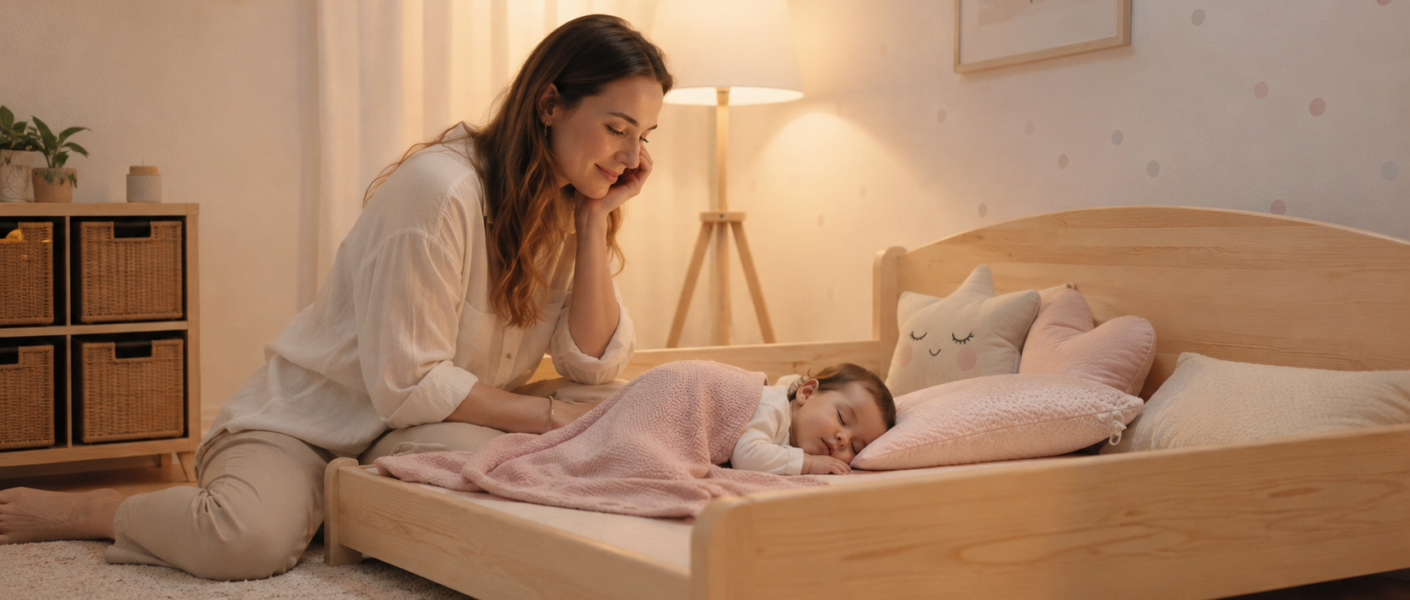
Can a Montessori bed help reduce night wakings? This is a very common question for parents who are hoping for calmer nights and a more respectful, child-centered sleep routine.
The most balanced answer is this: a Montessori bed, by itself, is not a treatment for night wakings. However, when introduced at the right time, in a safe room, and within a consistent bedtime routine, it may support independence, predictability, and less bedtime resistance for some children.
The key is understanding that night wakings are not caused only by the type of bed a child sleeps in. They can be related to neurological development, family habits, sleep associations, separation anxiety, bedtime schedules, the sleep environment, breathing issues, and emotional development.
What Is a Montessori Bed?
A Montessori bed is a low bed, often placed close to the floor, inspired by the Montessori principles of independence, freedom, and safety.
The idea is to allow a child to get in and out of bed more independently, without always needing an adult to lift them in or out of their sleep space.
In real life, Montessori beds are often used during the transition from a crib to a toddler bed or child’s bed. But this change should always consider the child’s age, the safety of the bedroom, the child’s maturity, and the caregivers’ ability to maintain a predictable routine.
Does a Montessori Bed Directly Reduce Night Wakings?
There is no strong scientific evidence showing that a Montessori bed, on its own, reduces night wakings.
Research on children’s sleep shows that night wakings are more often connected to behavioral, environmental, and physiological factors than to the specific style of bed.
This means that simply switching from a crib to a low floor bed will not automatically solve challenges such as waking many times, calling for parents overnight, or struggling to fall back asleep.
Why Do Some Families Notice an Improvement?
Some children do seem to sleep better after the change because the new bed comes along with other important adjustments.
Parents may also create a calmer bedtime routine, organize the room differently, reduce bedtime battles, and offer more predictability.
In these cases, it is not the bed alone that reduces night wakings. It is the combination of a safe environment, a steady routine, and consistent parental responses that helps the child feel more secure.
Why Do Children Wake Up During the Night?
Waking during the night is physiologically normal. Sleep happens in cycles, and brief awakenings can occur between those cycles.
The challenge begins when a child cannot fall back asleep without the same condition that was present at bedtime, such as being rocked, fed, held, having a parent nearby, or using screens.
This pattern is often called a sleep association. The child connects falling asleep with outside help, and when they naturally wake during the night, they look for that same help again.
Discover the best-selling Montessori beds
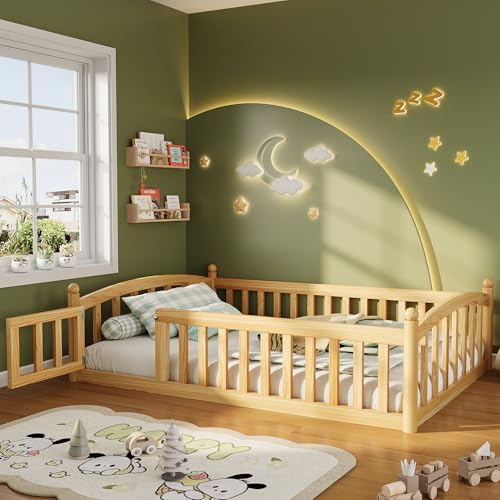

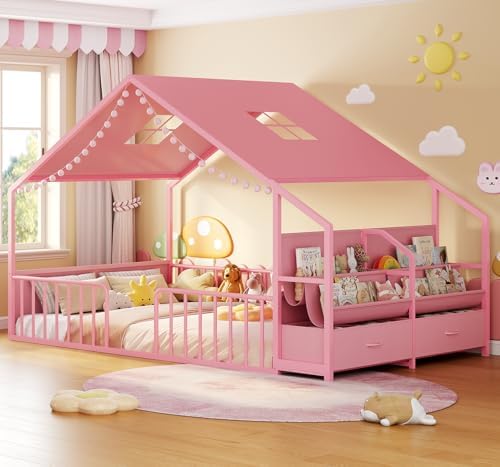
Can the Independence of a Montessori Bed Help With Sleep?
It can help in some cases, especially when the child is old enough and developmentally ready to handle more freedom.
A low bed may reduce the feeling of being confined, help the child participate more in the bedtime routine, and make the bedroom feel like a warm and welcoming space. This may lower resistance when it is time to lie down.
But independence does not mean a lack of boundaries. Young children still need a bedtime, a calming routine, supervision, and clear expectations about staying in their room at night.
When Can That Independence Make Sleep Harder?
Independence can become a challenge when the child is not yet able to handle the freedom of getting out of bed repeatedly.
In that case, a Montessori bed may lead to more trips to the parents’ room, nighttime play, or more difficulty settling into sleep.
That is why the decision should not be based only on style, trends, or how beautiful the bed looks in the room. It should be based on the child’s real behavior, maturity, and sleep patterns.
What Is the Best Age to Use a Montessori Bed?
There is no one perfect age for every child. Many families consider the transition sometime between 18 months and 3 years old, but this can vary a lot.
For younger babies, especially infants under 12 months, safe sleep recommendations are the priority. Babies should sleep on a firm, flat surface with no pillows, loose blankets, bumpers, stuffed animals, or soft objects in the sleep space.
For older toddlers, the transition may be considered when there are signs of readiness, such as trying to climb out of the crib, showing interest in a bed, or understanding simple bedtime instructions.
Is a Montessori Bed Safe for Children’s Sleep?
A Montessori bed can be safe when the entire bedroom is prepared as a protected sleep space.
This means removing or securing cords, accessible outlets, unstable furniture, small objects, long curtains, poorly anchored shelves, and anything that could create a risk of falling, entrapment, choking, or suffocation.
The mattress should be firm, flat, and properly fitted to the bed frame. It is also important to avoid gaps between the mattress, wall, and furniture, since narrow spaces can create an entrapment risk.
Does the Bedroom Need to Become Like One Big Crib?
In a way, yes. Once a child can get out of bed independently, the whole bedroom needs to be treated as a safe sleep environment.
Furniture should be anchored to the wall, outlets should be covered, windows should be locked, and unsafe objects should be removed.
Freedom is only helpful when it happens within safe and clear boundaries.
How Does Routine Affect Night Wakings?
Routine is one of the most important parts of healthy sleep for young children. Children tend to sleep better when their bodies recognize repeated cues that bedtime is coming.
A predictable bedtime routine may include a bath, dim lights, brushing teeth, a short story, calm music, and a loving goodnight. The ideal routine is simple, soothing, and repeated in the same order every night.
This consistency supports the child’s circadian rhythm, the internal body clock that helps organize sleep and wakefulness.
Does a Montessori Bed Replace Good Sleep Hygiene?
No. Sleep hygiene is still essential.
This includes having a regular bedtime and wake-up time, keeping lights low at night, avoiding screens before bed, creating a quiet environment, maintaining a comfortable room temperature, and choosing calm activities in the evening.
A Montessori bed can be part of a healthy sleep environment, but it does not replace these habits.
What Should Parents Avoid Before Bedtime?
Before bed, it is best to avoid screens, rough play, bright lights, very heavy meals, and sudden changes in the routine.
The light from screens can interfere with melatonin, the hormone involved in helping the body prepare for sleep. Stimulating content can also make a child more alert right when the body needs to slow down.
When Do Night Wakings Need Medical Evaluation?
Parents should seek professional guidance when night wakings are very frequent, intense, or accompanied by other symptoms.
Habitual snoring, pauses in breathing, excessive sweating, very restless sleep, daytime sleepiness, intense irritability, growth concerns, significant reflux, or waking with inconsolable crying should be discussed with a healthcare provider.
In these cases, the issue may not be the bed at all. It may be related to sleep-disordered breathing, reflux, allergies, pain, anxiety, or another medical concern.
How Can Parents Use a Montessori Bed in a Sleep-Friendly Way?
The best approach is to make the transition calmly. Explain to your child that this is their special place to sleep, keep bedtime consistent, and preserve the same nighttime routine.
During the first few days, your child may be curious and may get out of bed several times. Respond with gentle firmness. Walk them back to bed, avoid long conversations, and keep the routine predictable.
Adult consistency matters more than the bed itself. Young children feel more regulated when they experience safety, repetition, and clear limits.
Does a Montessori Bed Help Reduce Night Wakings for Every Child?
No. Some children adjust beautifully. Others may become more active or excited with the extra freedom.
Children with a more curious temperament, irregular sleep, or a strong need for parental presence may need a slower and more gradual transition.
It is also important to remember that developmental phases, a new sibling, moving homes, potty training, starting school, and separation anxiety can temporarily affect sleep.
Conclusion: The Bed May Help, But It Is Not the Main Solution
Can a Montessori bed help reduce night wakings? It may help indirectly when it is part of a safe, calm, and predictable sleep environment. But it should not be seen as a stand-alone solution.
Children’s sleep develops over time. It depends on maturity, routine, emotional security, a safe environment, and consistent responses from caregivers.
More than choosing a specific bed, the most important thing is creating a sleep experience that helps your child feel protected, respected, and able to rest peacefully.
References
American Academy of Sleep Medicine — Consensus Statement on Recommended Amount of Sleep for Healthy Children:
https://pmc.ncbi.nlm.nih.gov/articles/PMC5078711/
NIH / MedlinePlus — Bedtime habits for infants and children:
https://medlineplus.gov/ency/article/002392.htm
PubMed Central — Behavioral insomnia in infants and young children:
https://pmc.ncbi.nlm.nih.gov/articles/PMC7940085/
PubMed — Behavioral treatment of bedtime problems and night wakings in young children:
https://pubmed.ncbi.nlm.nih.gov/17068979/
American Academy of Pediatrics — Safe and sound: Help young children get a good night’s rest:
https://publications.aap.org/aapnews/article/28/3/25/21710/Safe-and-sound-Help-young-children-get-a-good
Most Read Posts

Postpartum Care

Baby Sleep

Breastfeeding

Infant Formula

Baby Bottles

Feeding Your Baby

Diapering & Bathing

Health & Development

Milestones & Development

Colic & Fussiness

Baby Gear & Safety

Traveling with Baby
Recent posts
- Liquid vs. Powder Baby Formula: Which Is the Better Value?
 Compare liquid vs. powder baby formula, including cost, convenience, safe preparation, storage, and which option may be best for your baby.
 - How Do I Know If I’m Ready to Care for a Newborn?
 Learn how to know if you’re ready to care for a newborn, with gentle guidance on feeding, safe sleep, warning signs, and emotional support.
 - First Baby: What If I Feel Lost in the First Few Days?
 Feeling lost with your first baby? Learn what is normal in the first newborn days, when to ask for help, and how confidence grows with time.
 - Is a Folding Stroller Durable Enough for Everyday Use?
 Is a folding stroller durable enough for everyday use? Learn what affects strength, safety, weight limits, and long-term performance.
 - Pregnant for the First Time: What Should You Do in the First Few Weeks?
 Pregnant for the first time? Learn what to do in the first few weeks, including prenatal care, nutrition, folic acid, and warning signs.
 - How to Support Your Partner During Labor and Delivery
 Learn how to support your partner during labor with practical tips for comfort, communication, pain relief, and emotional reassurance.
 - Can a Bedside Sleeper Help First-Time Moms?
 Can a bedside sleeper help first-time moms? Discover its benefits, safety tips, and how to choose the right option for your baby.
Click here to read the article in Portuguese

I’m Cris Coelho, and motherhood has transformed my life!
As a speech therapist and early childhood educator, I’ve always been passionate about child development. But it was becoming a mother that truly opened my eyes to the real challenges and joys of this journey.
Here at Materníssima, I share everything I’ve learned — blending professional knowledge, real-life experience, and a heartfelt touch.
You’re very welcome here! 💕
