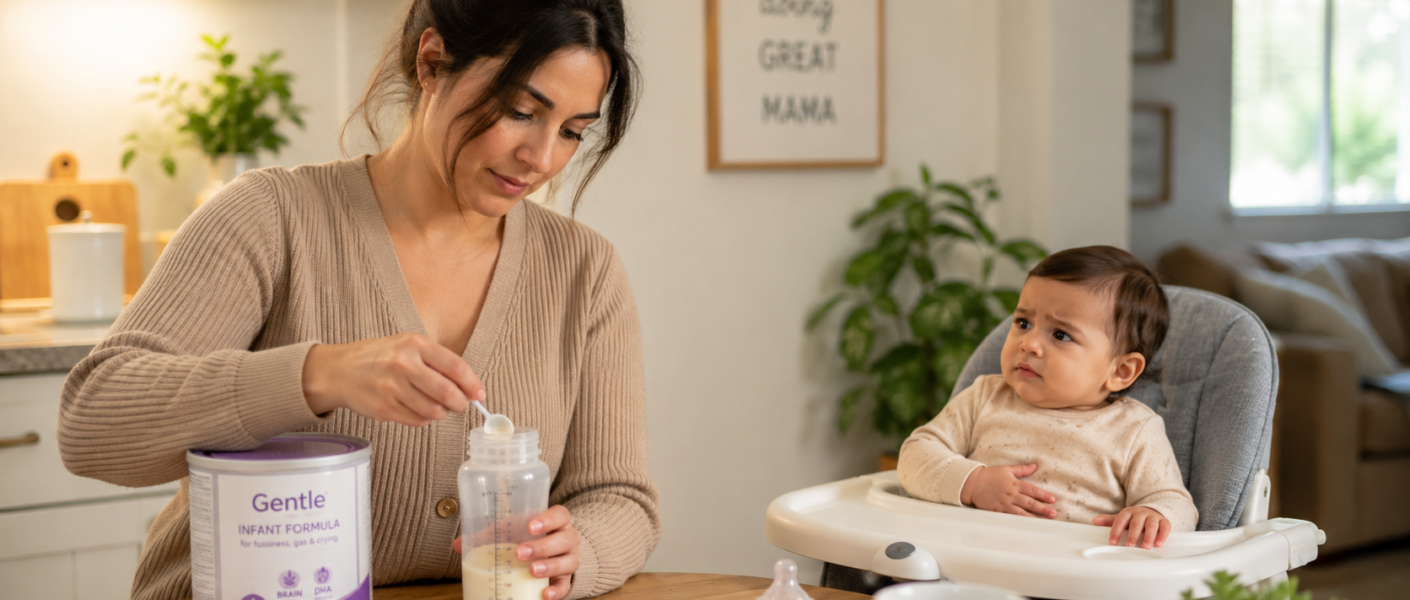
For most families, powdered baby formula is the more affordable choice. Ready-to-feed liquid formula costs more but offers greater convenience and a lower risk of bacterial contamination before opening. It may be especially helpful for premature babies, infants younger than 2 months, and babies with weakened immune systems.
The right choice depends on more than price. Your baby’s health, how often you use formula, access to safe water, preparation conditions, and your pediatrician’s recommendations should all be considered.
What Types of Baby Formula Are Available?
Infant formula is generally available in three forms:
- Powdered formula
- Concentrated liquid formula
- Ready-to-feed liquid formula
Powdered formula must be mixed with the exact amount of water listed on the label. Liquid concentrate must also be diluted according to the manufacturer’s directions. Ready-to-feed formula can be poured directly into a clean bottle without adding water.
Is All Liquid Formula Ready to Use?
No. Always check the label.
Adding water to ready-to-feed formula dilutes its nutrients and can create a dangerous electrolyte imbalance.
Likewise, giving concentrated liquid formula without the required amount of water can place unnecessary stress on a baby’s kidneys and metabolism. Follow the mixing instructions exactly every time.


What Is Constipation in In
Is There a Nutritional Difference Between Liquid and Powder Formula?
When they belong to the same formula category and are prepared correctly, both forms should provide the calories, protein, fats, carbohydrates, vitamins, and minerals appropriate for the baby’s age.
However, liquid and powdered versions are not always identical. Ingredients, thickeners, emulsifiers, and nutrient concentrations may vary by product.
Talk with your pediatrician before switching, especially if your baby uses a specialized formula for allergies, prematurity, reflux, or another medical condition.
Why Is Liquid Formula Considered Safer?
Ready-to-feed and concentrated liquid formulas are manufactured to be sterile before opening. This reduces the risk of contamination from microorganisms inside the product.
Powdered formula is not sterile. In rare cases, it may contain bacteria such as Cronobacter sakazakii or Salmonella, which can cause serious infections in vulnerable newborns.
Which Babies Need Extra Precautions?
Ready-to-feed liquid formula may be preferred, when available and medically appropriate, for:
- Babies younger than 2 months
- Babies born prematurely
- Babies with weakened immune systems
- Infants who are sick or receiving medical treatment
- Families without reliable access to safe drinking water
- Emergencies in which formula cannot be prepared safely
Your pediatrician can help you choose a formula that meets your baby’s nutritional and medical needs.
Does Liquid Formula Eliminate Every Risk?
No. Although liquid formula is sterile before opening, it can become contaminated afterward.
Hands, bottles, nipples, bottle parts, and preparation surfaces must still be properly cleaned. Once opened, the formula must be refrigerated and used within the time listed on the label.
Formula that has touched your baby’s mouth should never be poured back into the original container or saved for another feeding.
Why Is Powdered Formula Usually More Affordable?
Powdered formula generally costs less per prepared ounce, takes up less storage space, and allows caregivers to make only the amount needed. This may reduce waste when a baby drinks small amounts or receives formula only as a supplement.
Still, the true cost includes more than the price of the container. Safe water, cleaning supplies, electricity or gas, preparation time, and discarded formula can all affect the family budget.
Which Type Is More Convenient for Nighttime Feedings?
Ready-to-feed formula is usually the most convenient at night because there is no need to measure water or powder. Fewer preparation steps can also reduce mistakes when caregivers are exhausted.
Powdered formula requires careful measuring, even at 3 a.m. Formula that is too diluted or too concentrated can cause nutritional imbalances, dehydration, or stress on the baby’s kidneys.
Which Formula Is Better for Travel?
Ready-to-feed formula is convenient when you are unsure about water quality or do not have a clean place to prepare bottles. Single-serving containers can also minimize handling and waste.
Powdered formula is lighter and takes up less room, but you will still need safe water and clean feeding supplies. Carrying premixed bottles without proper refrigeration can allow harmful bacteria to multiply.
For air travel, review current TSA rules for carrying infant formula before leaving home.
How Do You Prepare Powdered Formula Safely?
Wash your hands thoroughly and clean the preparation surface. Bottles, nipples, and other feeding supplies should be cleaned carefully and sanitized when recommended for your baby’s age or health.
For most healthy babies, the CDC advises using safe tap water and following the preparation instructions on the formula container.
Additional precautions are recommended for babies younger than 2 months, those born prematurely, and those with weakened immune systems. The CDC recommends boiling water, waiting about five minutes, and then mixing it with the powder. Water at approximately 158°F, or 70°C, helps kill bacteria that may be present in powdered formula.
After mixing, cool the bottle to a safe feeding temperature. Always follow your pediatrician’s advice and the product label.
Should You Add the Powder or Water First?
Measure the exact amount of water first. Then add the number of level scoops listed on the label.
Do not pack the scoop, make a “stronger” bottle to help your baby stay full longer, or add extra water to make the formula last. Changing the proportions can create a dangerous nutritional imbalance.
How Long Can Prepared Formula Be Stored?
According to the CDC, prepared formula should be used within two hours of preparation and within one hour after feeding begins.
If the bottle has not been offered to your baby, place it in the refrigerator immediately and use it within 24 hours, unless the product label says otherwise.
Discard any formula left in the bottle after a feeding. Your baby’s saliva can introduce bacteria that multiply over time.
Storage times for opened liquid formula vary by product, so always follow the label.
Does Liquid Formula Cause Less Gas?
Not necessarily.
Gas can be affected by feeding technique, nipple flow, swallowed air, digestive maturity, and the ingredients in a particular formula.
Vigorously shaking powdered formula may create foam, but switching to liquid formula will not necessarily resolve gas, colic, or reflux. Persistent symptoms should be discussed with your pediatrician.
Can You Alternate Between Liquid and Powder Formula?
Sometimes, as long as both products are equivalent and appropriate for your baby.
Even formulas sold under the same brand may have small differences in flavor, texture, or ingredients. These differences can affect acceptance, bowel movements, or digestive comfort.
Babies with cow’s milk protein allergy, significant reflux, prematurity, or other medical needs should not switch formulas without professional guidance.
How Do You Decide Which Option Is Worth It?
Powdered formula may offer the best value when your baby is healthy, formula is used regularly, and you have reliable access to safe water and clean preparation supplies.
Ready-to-feed liquid formula may be worth the additional cost when your priorities include:
- Reducing preparation steps
- Avoiding dilution mistakes
- Making nighttime feedings easier
- Traveling more conveniently
- Protecting a medically vulnerable baby
Some families use powder at home and ready-to-feed formula while traveling. This can be a practical approach when both versions are appropriate for the baby and the pediatrician approves the switch.
The Best Value Is Not Always the Lowest Price
Powdered formula usually offers the lowest cost per prepared ounce. Ready-to-feed formula provides greater convenience and a lower risk of bacterial contamination before opening. Neither option is universally better for every baby or family.
The best choice is one that meets your baby’s nutritional and medical needs and can be prepared safely and accurately every day.
When it comes to infant feeding, affordability, safety, and convenience all matter. The formula that offers the best value is the one your family can use consistently, hygienically, and with guidance from your pediatrician.
References
CDC — Infant Formula Preparation and Storage:
https://www.cdc.gov/infant-toddler-nutrition/formula-feeding/preparation-and-storage.html
FDA — Handling Infant Formula Safely:
https://www.fda.gov/food/buy-store-serve-safe-food/handling-infant-formula-safely-what-you-need-know
WHO — Safe Preparation, Storage and Handling of Powdered Infant Formula:
https://www.who.int/publications/i/item/9789241595414
American Academy of Pediatrics — Forms of Baby Formula:
https://www.healthychildren.org/English/ages-stages/baby/formula-feeding/Pages/Forms-of-Baby-Formula.aspx
Most Read Posts

Postpartum Care

Baby Sleep

Breastfeeding

Infant Formula

Baby Bottles

Feeding Your Baby

Diapering & Bathing

Health & Development

Milestones & Development

Colic & Fussiness

Baby Gear & Safety

Traveling with Baby
Recent posts
- Liquid vs. Powder Baby Formula: Which Is the Better Value?
 Compare liquid vs. powder baby formula, including cost, convenience, safe preparation, storage, and which option may be best for your baby.
 - How Do I Know If I’m Ready to Care for a Newborn?
 Learn how to know if you’re ready to care for a newborn, with gentle guidance on feeding, safe sleep, warning signs, and emotional support.
 - First Baby: What If I Feel Lost in the First Few Days?
 Feeling lost with your first baby? Learn what is normal in the first newborn days, when to ask for help, and how confidence grows with time.
 - Is a Folding Stroller Durable Enough for Everyday Use?
 Is a folding stroller durable enough for everyday use? Learn what affects strength, safety, weight limits, and long-term performance.
 - Pregnant for the First Time: What Should You Do in the First Few Weeks?
 Pregnant for the first time? Learn what to do in the first few weeks, including prenatal care, nutrition, folic acid, and warning signs.
 - How to Support Your Partner During Labor and Delivery
 Learn how to support your partner during labor with practical tips for comfort, communication, pain relief, and emotional reassurance.
 - Can a Bedside Sleeper Help First-Time Moms?
 Can a bedside sleeper help first-time moms? Discover its benefits, safety tips, and how to choose the right option for your baby.
Click here to read the article in Portuguese

I’m Cris Coelho, and motherhood has transformed my life!
As a speech therapist and early childhood educator, I’ve always been passionate about child development. But it was becoming a mother that truly opened my eyes to the real challenges and joys of this journey.
Here at Materníssima, I share everything I’ve learned — blending professional knowledge, real-life experience, and a heartfelt touch.
You’re very welcome here! 💕